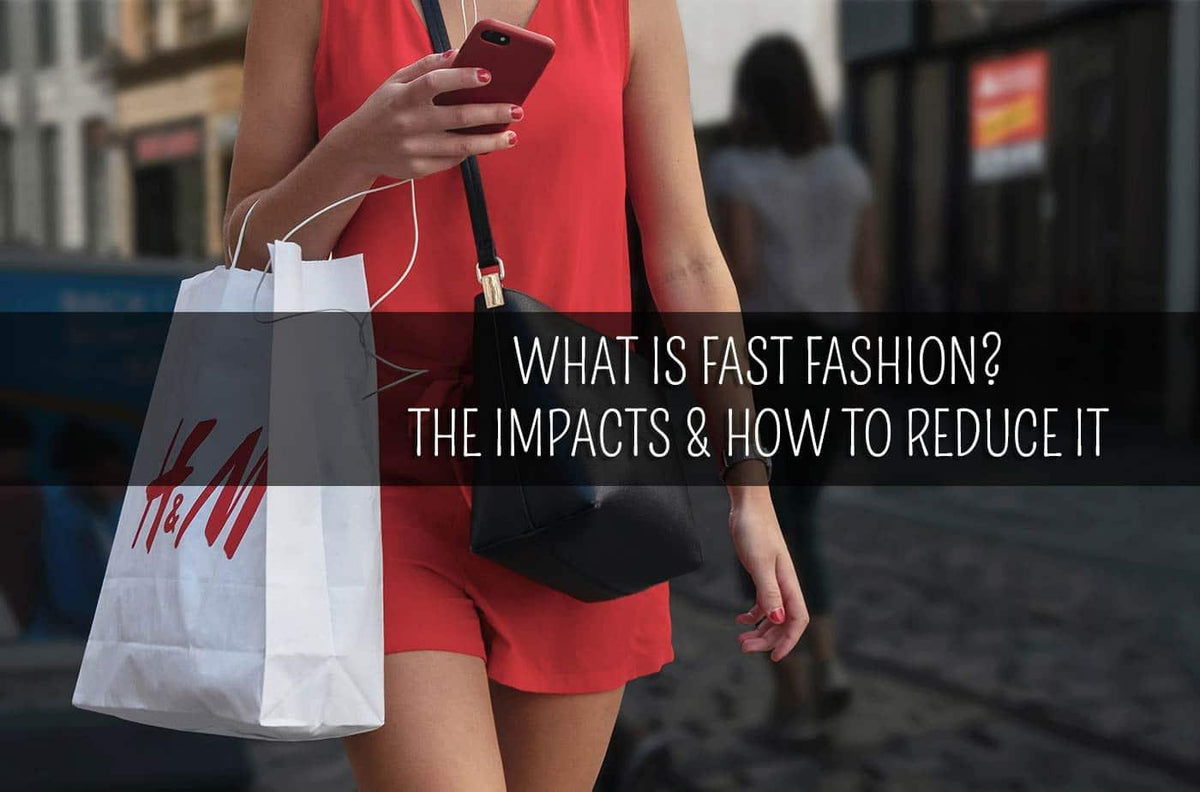
What is fast fashion? What are the impacts of fast fashion on our environment? And help with sustainable fashion ideas.
So What Is Fast Fashion?
Fast Fashion is a term that’s been buzzing around for some years now and there are a couple of environmental activists here and there who are making noises about the unforeseeable impacts of it on our environment. So what exactly is “Fast Fashion” anyway, and how did it become so fast? Three words; cheap, quick, and disposable. These three words sum up the whole meaning behind fast fashion, and that is to produce cheap, fashionable clothes that move quickly from production to the market in a very short span of time.
But what is there to worry about?
The desire to always be in fashion with new seasonal changes and to never be seen in a single piece of clothing twice has paved the way for fast fashion to swoop in with large volumes of cheap clothes that move rapidly from drawing board to large retail stores. This includes the manufacturing overseas - to save every single penny for corporate profit - to impoverished countries with weak or non-existence labor and environmental regulations that further provide fast fashion the audacity to use low-quality textile and dyes at the expense of child labor, unfair wages, and hazardous work environments.
Environmental Impacts
The desire to wear clothes that are fashionable results in a vast amount of clothes simply thrown away, with very minimal use. These garments, full of lead, pesticides, and countless other chemicals, spend their life releasing these toxic chemicals into landfills, into the air that we breathe, and into the water that we drink. Fast fashion environmental footprints are giving huge industries such as air travel and oil refineries a run for their money.
These environmental impacts will hopefully lead you to a more realistic and sustainable fashion sense, in the hope that we might be able to reduce the impacts our desire to wear fashionable clothes has on the world around us.

Huge consumption of resources
As consumers worldwide are buying more clothes in what appears to look like a new throwaway culture, the demand is increasing significantly and it’s taking a toll on our environment. To put it into perspective, it takes about 700 gallons of water to produce one cotton shirt and about 2000 gallons to create a pair of jeans. That’s about eight cups of water per day for 10 years. Fast fashion makes up to 10% of human global carbon emission, putting a severe toll on our environment.
Low cost and even lower quality
With the increased demand in consumption – thanks to industrial top players convincing the general public that we are behind trends as soon as it is being worn – the next line of fashionable clothes needs to hit the floor before it is deemed too late. This, however, comes with consequences as brands focus on fast delivery with low cost that ultimately results in even lower quality, making the clothes wearable for a shorter span of time.
Sweeping of dangerous chemicals in our natural resources
All of the basic ingredients of fast fashion – fast production, fashion replication, competitive prices, and low quality – end up having a huge impact on the environment. The environmental damage is in large part due to the use of toxic chemicals, synthetic fabrics, and dangerous dyes that sweep into our natural resources during production and the washing of these clothes at home.
Not to mention washing those clothes can send thousands of microplastic into waterways, and inevitably, the ocean every year. This can be avoided by moving away from synthetic materials such as nylon and polyester, and if you do have clothes with synthetics in, wash them in a laundry bag which catches prevents the leakage of these microplastics. What’s more, almost 85% of all textiles get sent to landfill every year.
Human rights violations
After reading the environmental impacts of fast fashion, you must be wondering, “Am I supposed to purchase expensive clothes?”. The said story is, if we as consumers don’t pay the price, someone, somewhere inevitably will. And usually, this is in exchange for their basic human rights.
Fast fashion contributes significantly to human rights violations. Despite all these human rights violations, people still sway more towards fast fashion over sustainable fashion. Understandably, most of this will come down to affordability - a mum trying to clothe a young family is no cheap feat after all. But hopefully, with an increase in awareness of what the real costs are, more and more people will look towards sustainable fashion options, and maybe even hit up those charity shops a little more: some of our favorite clothes are the ones that we've picked up in charity shops and markets from previous whirlwind relationships, and these have also been some of the most affordable.
Rising trend of sweatshops
To supply the ever-increasing demands of fast fashion, brands such as
Gap and H&M often turn a blind eye towards the factories that are literally the very representation of sweatshops that we thought didn't exist anymore. More than 540 workers at their factories have described incidents of threats and abuse, according to reports of
Global Labour Justice.
Violation of women's rights
One of the bitter impacts of fast fashion is the violation of women's rights. Fast fashion brands often predominantly employ women as garment workers from less developed countries working in Asian factories (again - H&M, Gap and Zara amongst many others - we're watching you). These women mostly witness a host of labor abuses. These range from poor wages to factory owners and managers denying paid maternity benefits or even firing pregnant workers, forced overtime work, and even workplace sexual harassment.

Hazardous work environment
Six years ago in April, more than 1000 people died and thousands more were injured when an eight-story building home to several fast
fashion factories collapsed due to criminal negligence. This incident is recorded as the worst garment disaster of all time, and when you think about all those people who were just trying to feed their families, a chill goes down the spine and makes us wonder, “Is all the worth it?”. A look towards a more sustainable fashion approach can really help reducing disasters such as this.
Low wages
£52 - that’s a monthly payment for a Bangladeshi garment worker – an amount mostly paid to men as women are paid even less – and we are not even talking about other factors such as blackmailing into working for even less and pay for child labor. The amount here is the most optimistic one and we all know this is not paid everywhere. This is one of the most messed up impacts of fast fashion since it's these low wages that returns the huge amount of profits for fast fashion companies! The greed and audacity really grinds our gears, and together, we have to bring an end to it.
Child labor
No child deserves to work in disgusting sweatshops where they face abuse and threats just for the sake of our comfort of keeping up with fashion. According to The Global Estimates of Child Labor, there are 152 million child laborers around the world who work in hazardous conditions for more than 9 hours per day. Remember, for our inexpensive apparel, a child somewhere is paying the price on the expense of their basic human rights, something that doesn’t happen in the sustainable fashion industry.
How To Reduce The impact?
Stick to slow fashion
A very much environmentally friendly option is to stick with what you have for a long time, which ultimately results in fewer new items being produced. It can get very difficult to practice once the trends change, but it’s one of the very few ways to lower the impact of fast fashion on our environment.
Ultimately, it is the fashion industry which spends over $500 billion a year on marketing new fashion to their audiences in the hope to hook them in and get their money - that is the name of their game after all.
What we should all be doing is picking our own style and wearing what makes us happy - not just because Joe Bloggs says it's cool'.
Swap your clothes
Had your fair share of fun with a new trendy pair of jeans? Get it swapped with someone to keep your wardrobe trendy. It’s probably the most sustainable solution because you are not only giving a piece but you are getting one as well that ultimately results in a lesser landfill and lesser production.
Fall in love with second-hand clothes
It’s a great sustainable solution to fast fashion – the piece already exists so there won’t be a need for the production of any new pieces. So you are literally saving the entire negative impact of the production, all whilst getting a new bit of clothing in the process.
One other thing worth mentioning here is that charity shops already turn away most of our handed in clothes - they simply don't have the capacity for all donations - so these end up going to landfill anyway. Leaving unloved fast fashion clothing with a charity shop with the idea this allows you to go buy more cheap clothes is not a sustainable solution.
The same applies to resale websites and apps which allow you to quickly and easily sell unloved clothes. If the purpose of your sale is to get some money back to go spend on fast fashion again, you're still contributing to the problem. It gives the customers who sell their clothes less incentive to think about their purchase, which again is only fueling fast fashion in itself.
Buy some second-hand clothes with the sale of your old clothes, take pleasure shopping those quirky and vintage rails in charity shops, and fall in love with someone else once-loved items - now doesn't that sound so much more romantic.
Vegan Fashion
The most sustainable and best solution to reduce the impacts of fast fashion has got to be Vegan Fashion. It is highly environmentally friendly as it not only reduces the impacts of fast fashion but also reduces the negative environmental impact caused by animals. You are preventing animals from dying or suffering pointlessly for your clothes.
Most big brands use plastic and other nonbiodegradable materials which cost less - thanks to the large consumer demand to stay in fashion - but ultimately affects our environment. So, looking for innovative materials such as pinatex, cork, lenzing tencil or seacell is also another great option. Also, there are more and more brands coming up with innovative ways to make clothing using recycled materials...definitely worth checking them out!
Wrapping Things Up
Fast fashion isn't going away any time soon, so all we can hope to do is help raise awareness and start creating some change away from the biggest offenders. We should all be boycotting the brands that don't support basic human rights, and that goes without saying. They will either have to change the way they do business or go bust. We as consumers hold all of the power, so be wary about the brands you spend your money with. Every time you shop with a business you are casting a vote for the type of world we want to live in - just be mindful about that.
And don't forget to go find some gems down your local charity shops and swap clothes with your palls...anything that doesn't require a new garment of clothing to be made is a happy way of shopping!
References: