What is palm oil, why is palm oil bad for the environment, and is there sustainable palm oil?
If you’re a person that looks towards the future by focusing on being sustainable, ethical, and environmentally friendly, it’s important to take a close look at the every-day products we all know and love.
It has been found that about 90% of the ingredients in the foods you see at your supermarket are unhealthy. Now, besides the obvious (that’s right, I see you in the sweets aisle), one of the biggest offenders is the use of palm oil. What is palm oil you ask; surprisingly, it is a vegetable oil that is unhealthy to both our beautiful bodies and our precious planet.
But don’t worry, you’ve come to the right place. So, what is palm oil? And why is palm oil bad for the environment? Let's get right to it, but first I do want you to know that there are sustainable palm oil solutions available, so don't go jumping the gun on everything palm oil just yet. More on that to come!
What Is Palm Oil?
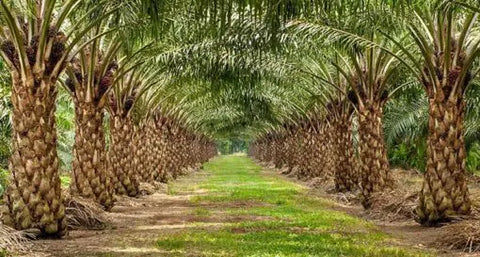
Simply put, palm oil is a vegetable oil extracted from fruits grown on the African oil palm tree. You’d be forgiven for thinking it could be healthy as it appears to be a natural ingredient derived from the things we need to eat the most, however they actually have a very high fat content!
Palm oil is used a lot, from processed foods to household cleaning products and from make-up to animal feed. The World Wildlife Fund claims that roughly 50% of the products we purchase contain palm oil.
So, why is palm oil so popular? Because palm oil can increase the shelf life of food products without changing their delicious looks, making it a good option for the food industry and an ever-growing consumerist society.

Why Is Palm Oil Bad For The Environment?
The biggest impact of the use of palm oil has not come through its benefits in food storage but it’s environmental footprint. Our beautiful and vast rainforests are at risk of extinction because of deforestation for palm oil.
If we take a look at some statistics surrounding palm oil, we can see that ten times more palm oil is produced today than in 1980. As well as this, palm oil production is expected to rise by 50% over the next 30 years.
African oil palm trees grow in temperate climates such as in Thailand, Indonesia, and Malaysia. You’ll usually find them in the biodiverse rainforests that contains vast life and wonder - this same life we want to protect through sustainable practices and consumer living.
The question ‘why is palm oil bad for the environment?’ comes with many answers, but here are just a few;
Unsustainable Practices
Our rainforests are being cleared for palm oil production at a much higher rate than they are growing.
Child Labour
Unfortunately, many of the countries where palm oil can be harvested will use young children at low wages to obtain the product for the financial benefit of the companies. Definitely not something consumers would benefit from.
Oxygen Depletion
With large green areas comes life; trees process carbon dioxide into oxygen through the process of photosynthesis, and with deforestation, our oxygen levels will inevitably decrease.
Greenhouse Gases
You may be interested to learn that not all greenhouse gases derive from the backside of farm life or your partner; when trees are cut down, they release all of that carbon which they have been storing up into our atmosphere.
Loss of Habitats
With deforestation comes the removal of so many homes for all creatures great and small, causing them to lose out on food sources, possibilities for new life, and the wealth of life-breeds.
The Orangutans
You may have seen some TV adverts that show the devastation the palm oil industry has had on our magnificent orangutans. They are smart creatures, capable of communication through sign language and we want to keep them around forever.
In places like Borneo and Sumatra, orangutans have existed for longer than human beings. But, they have now become an endangered species across the globe thanks to the increase in the use of palm oil.
In Borneo, there are 104,000 orangutans left alive. In Sumatra, there’s only a mere 14,600 left in the forests. There was even a new species discovered called the Tapanuli Orangutan but only 800 of these are left to walk the earth today.
What is palm oil truly doing to benefit our planet? It comes with high devastation, it's a food we don't eat, and it is not a sustainable ingredient in production. You don't have to be a rocket scientist to work out that there aren't many.
Our aim at Friendly Turtle is to create a world-wide community of people who strive for planet sustainability through ethical consumerism. And, we love companies who have the same loving goals: two organizations worth mentioning are the Orangutan Land Trust and Sumatran Orangutan Society. Their goals are to stop deforestation entirely by encouraging sustainable palm oil production. This way our intelligent primates can live freely in our awesome rainforests of planet Earth.
Are there any sustainable palm oil methods? Yes. There are lots of ways our planet’s situation can be improved through a lifestyle change from us as consumers. If we work together to control the supply and demand chain, we can eradicate the devastation caused by non-sustainable palm oil usage.

Solution One: Sustainable Palm Oil Production
So now we know what palm oil is and the reasons why palm oil is bad for the environment, we need to now focus on how we can make a shift towards a better and more sustainable way of living with palm oil. Because let's face it - it isn't going away.
The Roundtable of Sustainable Palm Oil is a no-for-profit that represents stakeholders of the palm oil industry, including the consumer product manufacturers, palm traders, producers, retailers, environmental organizations, investors and bankers. These stakeholders have gathered to establish worldwide standards for the production of sustainable palm oil. Their end goal is to develop a new sector of the palm oil industry where wildlife, people, and their environments are all protected. However, with money remaining the largest driving factor for many palm oil companies, this will be a difficult endeavor.
Now, there is a good reason why deforestation and unsustainable palm oil production have not been banned. With the African oil palm trees growing in underdeveloped countries like Thailand, Indonesia, and Malaysia, workers depend on the palm oil industry for their sole income.
The solution would not be to eradicate the use of palm oil completely as companies would simply switch to an alternative oil product, causing an ongoing cycle of the problem we are currently facing. The solution must be to sustain the production of palm oil at limited quantities, allowing for growth in other market products and the use of fresher ingredients while introducing new methods for sustainable palm oil farming.
Some sustainable palm oil approaches can include the responsible development of new plantings, commitment to transparency, education towards the use of alternatives like used coffee grounds as well as compliance with global laws and regulations.
Solution Two: Play Your Part As Consumers
Consumer-trends can form a community of trends, eventually growing into a culture that can control the demand for palm oil. Yes, we as consumers have a LOT of power when it comes to the future of the planet and these poor orangutans, and our voices are heard through the products we buy and the companies we support.

If we made an effort to check the ingredients in our products and stopped purchasing products containing palm altogether, it would decrease demand. Then, naturally, we would see a reduction in deforestation. And if a product does contain palm oil, make sure that they're using palm oil from sustainable sources, at which we will also see deforestation come down as sustainably farmed palm oil increases.
Shop the brands that work with and support sustainable palm oil through the RSPO - the Round Table On Sustainable Palm Oil - who work within the global standards for sustainable palm oil production.
As lovers of everything sustainable, Friendly Turtle is here to promote the usage of sustainable materials. Our aim is to get the message out there about sustainable palm oil production so that we as consumers – and we as a culture – can make a difference in saving the rainforests, the ecosystems and the animals living in them.



0 comments