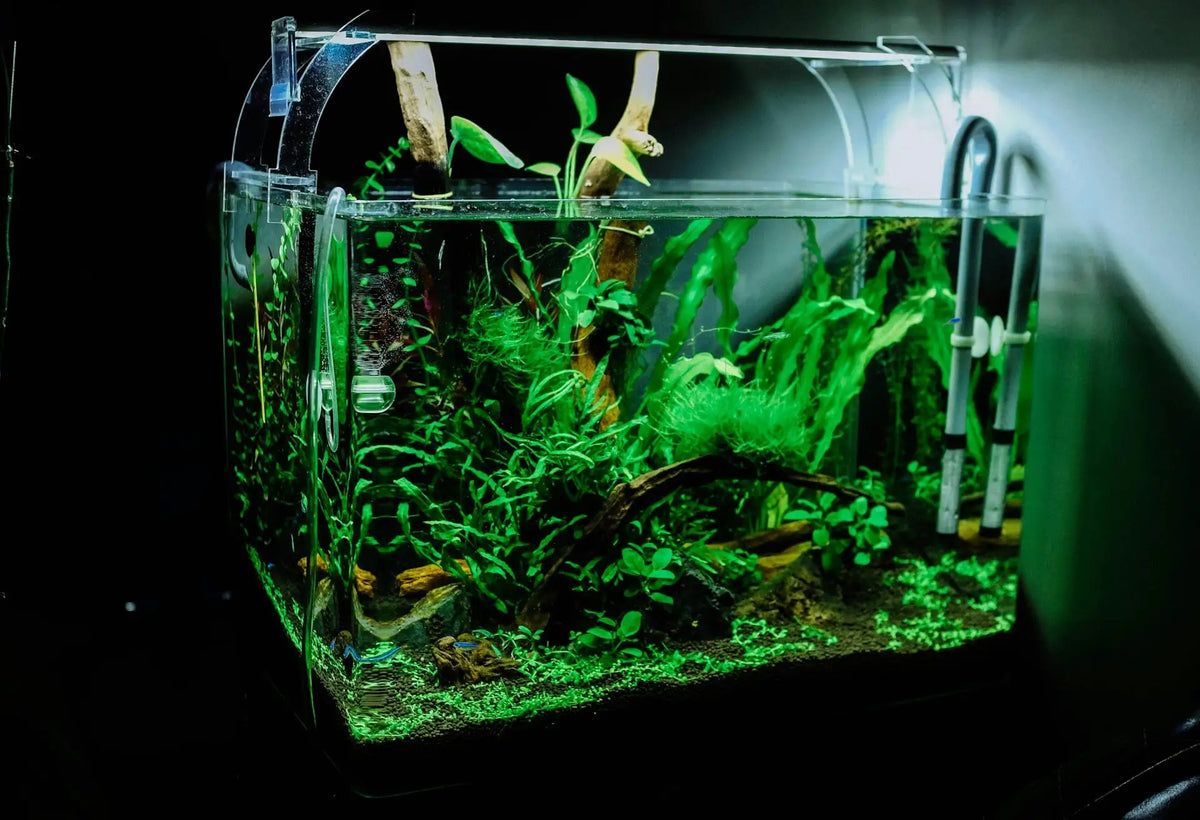
Do you ever wish you could bring a piece of the ocean into your home? Do you envision a rectangular glass filled with a vibrant underwater world teeming with life? That’s the beauty of an aquarium!
What if you could build such an aquatic wonder while being mindful of our planet and making a splash in green fishkeeping? A sustainable fish tank is more than just a hobby; it’s a journey that combines life nurturing with environmental consciousness. It entails creating a thriving ecosystem that reduces harmful impact. It’s all about the environmental well-being of Mother Nature every step of the way. Why should you go green? It helps reduce the impact on the water ecology and benefits fish, improving the food chain balance. Welcome to the world of green aquariums!
Getting Started: The Basics of Eco-Friendly Aquariums
First, size matters. While a big tank may not initially appear environmentally helpful, keeping the water temperature and pH levels under control in a large aquarium is more accessible. This means you alter the water less often and save on electricity in the long haul. Utilize at least a 20-gallon tank so your fish friends can benefit.
Consider green and sustainable materials to lessen waste. Seek second-hand tanks or purchase one made from recycled glass. Rather than artificial decorations, select natural materials like driftwood or source rocks from local areas.
For complex aquarium installations involving custom built-ins or integrated systems, professional design coordination services can help plan sustainable aquarium setups that maximise space efficiency whilst ensuring proper structural support and environmental integration.
Lighting is crucial but doesn't have to be an energy hog. LED lights are your best friends here — they're energy-efficient, long-lasting, and provide excellent illumination for aquatic plants. Plus, they won't heat your tank like old-school incandescent bulbs.
Speaking of plants, they're essential for a healthy ecosystem, but remember to avoid these toxic aquatic plants: water hemlock and peace lilies. We'll dive deeper into plant selection later, but starting with this in mind is crucial.
Creating a Healthy Aquatic Ecosystem
Now that we've covered the basics, let's create a vivid, beautiful, and green underwater habitat. The name of the game is balance.
Filtration and Substrates
The primary role of filtration is to facilitate the maintenance of aquarium water cleanliness to the extent that the water can safely sustain the fish. Did you know that technologies such as planted refugium exist? They are natural filters for your water, using plants to purify it. If this is too much of a commitment, search for filters that include adjustable flow rates.
Next, we have substrates or the bottom of the tank. Eco-friendly investments include sand and gravel sources or use aqua soil, an enriched planting substrate that nourishes plants and retains a stable pH level.
Plants and Fishes
A well-planted tank is a healthy tank but it is equally essential to be selective with the species. Avoid water hemlock and peace lilies for they both contain combinations unsuitable for some fish species and fatal for the overall ecology of your tank. According to the USDA, water hemlock is “violently toxic.” Peace lilies are beautiful and popular but may be harmful to certain fish species like betta fish. Instead, choose a robust, fast-growing species like Amazon Sword or Java Fern, known to be perfect for beginners and exceptionally effective in water purification.
On the topic of fish, let’s consider population. Overpopulation leads to poor water quality and unhappy fish. Some species require more tank space than others so provide optimum surroundings for them to thrive.
Maintenance and Care: Keeping It Green
So you’ve created your eco-friendly fish tank. Now, let’s talk about sustaining one.
Conservation
First, there’s water conservation. Smaller, more frequent water changes are often better. They’re less stressful for your fish and, most importantly, save more water in the long run. You can also try collecting a little rainwater or letting treated tap water sit for 24 hours before using it to remove any chlorine. Moreover, if you want a genuinely low-waste hack, use your old aquarium water for your house plants – they’ll thank you for the nutrient-dense treat!
Cleaning
“Clean” doesn’t mean “using chemicals.” Nature is our best cleaning option. Put snails or shrimp in the tank to keep the algae population under control. Use a magnetic cleaner or an old credit card to clean the glass. And that brown stuff on your driftwood? That’s likely good bacteria – let it stay.
Feeding
Overfeeding fish can cause water pollution and harm their health. Stick to small portions your fish can consume in two minutes, twice daily.
Maintaining a healthy aquarium involves both action and non-action. Be attentive to changes but avoid being overly anxious. Nature's ecosystem has its fluctuations. Maintain a state of equilibrium and you will receive what is necessary. This will result in a thriving and content habitat for aquatic animals that will need minimal care.
Advanced Eco-Friendly Aquarium Techniques
Up your green aquarium game yet? Learn additional methods to optimize your system:
Hydroponics and Aquaponics
Aquaponics combines hydroponics for plants with an aquaculture system for fish. The fish waste feeds plant growth, keeping the water clean, and in return, the plants thrive in fresh, warm nutrient-rich water. Create a mini ecosystem with substrate, plants, and small water creatures. Once stable, it can thrive for years with only occasional water replenishments, bringing natural perfection into your home!
Upcycling
The chipped ceramic mug might be the perfect cave for your bottom dwellers. Broken-up terracotta pots partially buried under the tank make great hides. Old plastic bottles can even be used to make floating planters for surface plants. The combined approach not only saves on waste but also makes your tank special and personal.
Refugium
Consider incorporating a refugium. This serves as an organic filter to benefit your fishes. Fill it with the types of plants that have immediate growth, and the smaller fishes are very the copepods for the water. This is a beautiful way for you to witness the microscopic world in which your fish live.
Lighting
Leverage natural light exposure by placing your aquarium near a window but watch out for temperature flu. Reduce artificial lighting and create lighting with beautiful effects of natural sunlight reflection on the water's surface.
These methods may seem complex, but they work and are rewarding. They will enhance your aquarium activities without harming the environment. Every small step towards sustainability counts!
Conclusion
Your aquarium represents a small piece of a natural habitat located within your home. When you start this, do it proudly and remind yourself that you are cultivating a moment and a greener world at that. Happy sustainable fishkeeping!