Getting an all on 4 dental implant is a smart step if you’re looking for a long-term replacement solution for your missing teeth. It’s one of two permanently fixed, implant-supported restorations, the other being the implant-supported bridge.
It’s understandable to prioritise clinical expertise and the use of dental implant technology. But a dental facility’s materials and practices can have an impact on your health and the planet, too.
If you care about both, it’s wise to choose an all on 4 clinic that makes the process more sustainable and health-conscious. These insights help you make the right choice.
Why Oral Health Is Crucial
Many Australian children and adults suffer from gum disease, tooth loss, and decay. In fact, such conditions contributed to 4.5% of the burden linked to non-fatal diseases in 2022. The main concern is that oral health frequently worsens over time if not addressed. (1)
A dental problem isn’t just a cosmetic issue. It affects an individual’s quality of living and social relationships. Chewing food and speaking are the main challenges leading to nutritional deficiencies and social anxiety. Add to those the altered facial structure and bone loss that complicate prosthetic restorations.
All on 4 as a Favourable Procedure
Some of the leading all on 4 clinic in Melbourne can handle even the most complex dental implant treatments and full-mouth reconstruction. All on 4 dental implants are gaining popularity worldwide because they’re less invasive than traditional solutions, including removable and fixed implant-supported dentures.
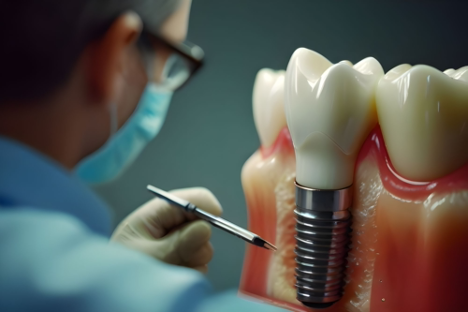
The technique involves using four smartly placed dental implants to replace a complete set of lower or upper teeth. As such, patients often have a shorter healing period, even if they require full-mouth dental implants, and are more likely to save costs in the long term.
Beyond the clinical benefits, an increasing number of implant dentistry specialists are making their procedures eco-friendly. Restoration procedures use fewer posts and reduce the need for bone grafting procedures in some patients. Depending on their oral condition, some might qualify for a graft-free all on 4.
What An Eco-Friendly Dental Clinic Looks Like
A 2025 study cited that patient and staff transportation contributed to 64.5% of the UK’s dental services units’ carbon footprint. Material supply (19%) and energy use (15.3%) were also to blame. Such a pattern paints a global picture, although private dental clinics aren’t responsible for their patients’ logistical needs. (2)
The good news is that many dental professionals worldwide aren’t just honing their surgical skills but are refining their dental care and treatment protocols as well. They do this by:
Shifting to Digital Technology
Instead of using messy and wasteful impression materials, they frequently use digital imaging to create a 3D model of your jaw. Similarly, they’ll use modern X-ray machines to reduce radiation exposure and eliminate the need for harmful chemicals that process the image.
More advanced clinics may use computer-guided surgery when placing custom-made replacement teeth. This still requires energy but can lower power consumption as it minimises human error and reduces a patient’s chair time.
Embracing Efficient Procedures
There are other ways that eco-conscious clinics can incorporate sustainable practices. For example, they can tap intravenous or IV sedation instead of using inhaled anaesthesia, which contributes to greenhouse gas emissions.
They can offer bone shaping that uses bioplastics and natural polymers instead of non-biodegradable metallic implants. When making a dental crown, a responsible dental facility would prefer milled zirconia over metal materials. Moreover, the clinic will prefer locally sourced materials to minimise the carbon footprint from transporting dental supplies.
A green dental clinic also has a strong waste management program. The team should recycle everything from paper and plastics, or dispose of medical waste properly.
Old dental practices generate significant plastic and material waste from single-use impression trays, disposable instruments, and non-biodegradable plastic packaging.
Limiting the use of such materials, embracing advanced tools and techniques, and simplifying the supply chain can lead to a more sustainable sector.
The Materials That Go Inside Your Mouth
For years, traditional dental restorations relied on mercury-based amalgam fillings, which were feared to leach into the body and cause certain health problems. The Minamata Convention on Mercury was adopted in 2013 and pushed for the eventual phaseout of dental amalgams. As a result, their use has steadily declined in the United States, reaching only 4.1% in 2023, from 21.8% in 2017. (3) (4)
When choosing whom to work on your implant placement, remember that you’re not just choosing a clinic. You’re also choosing the materials that will stay in your body for years. Apart from evaluating their surgical capability, ask your dental specialists about Bisphenol A or BPA-free resins and ceramics to ensure they’re using the safest materials available.
One of the most obvious signals of a health-focused clinic is its commitment to biocompatible materials. The body tolerates titanium fixtures and implants well. However, the bridge of the teeth can be made from various materials, each affecting health in different ways.
It’s common for reliable clinics to offer zirconia prosthetics. They’re a highly durable, hypoallergenic, and aesthetic option, so much so that some all on 4 procedures use zirconia implants instead of the usual titanium metal screws.

A Holistic Approach to Dental Treatment
A health-conscious clinic doesn’t stop at fixing your teeth. The staff must consider your whole well-being by knowing your medical history and delivering personalised dental implant solutions.
-
Stress reduction techniques: Dental anxiety affects more people than you might think. If this resonates with you, pick a dental centre that offers aromatherapy or breathing techniques to help you relax.
-
Post-surgical care: Healing from a surgical implant placement requires proper nutrition. Some clinics partner with nutritionists or dietitians to create recovery-friendly meal plans. They should be able to schedule follow-up care to monitor oral health improvements and guide you on sustainable oral health practices at home.
Be an informed and engaged patient when going for a consultation. Don’t be afraid to ask questions so you can gauge how your chosen clinic shows its care for the environment and love for its patients. Ask about the materials and methods they use. Allow them to walk you through the entire process.
Have a Guilt-Free Smile
The healthcare sector, including dentistry, is a considerable contributor to global emissions. To avoid adding to the environmental burden, choose an eco-conscious clinic. Doing so not only improves your life. It also provides a sense of fulfilment in knowing you’ve done your share in saving Mother Earth. When paired with a health-focused choice, you’re not just investing in your smile but your well-being, too.
References
1. ‘Oral health and dental care in Australia’. Source: https://www.aihw.gov.au/reports/dental-oral-health/oral-health-and-dental-care-in-australia/contents/introduction#:~:text=Poor%20oral%20health%20%E2%80%93%20mainly%20tooth%20decay%2C%20gum%20disease%20and%20tooth%20loss%20%E2%80%93%20affects%20many%20Australian%20children%20and%20adults%2C%20and%20contributed%204.5%25%20of%20all%20the%20burden%20that%20non%2Dfatal%20burden%20diseases%20placed%20on%20the%20community%20in%202022.%20Oral%20health%20generally%20deteriorates%20over%20a%20person%E2%80%99s%20lifetime%20(Infographic%201)
2. ‘The Role of Dentists in Promoting Environmental Awareness and Climate Consciousness for Sustainability’. Source: https://link.springer.com/article/10.1007/s43615-025-00561-z#:~:text=A%20report%20by,%2C%2037%5D.
3. ‘Minamata Convention on Mercury’. Source: https://www.epa.gov/international-cooperation/minamata-convention-mercury
4. ‘Declining US dental amalgam restorations in US Food and Drug Administration- identified populations: 2017-2023’. Source: https://www.sciencedirect.com/science/article/pii/S0002817724003970#:~:text=function%20(n%C2%A0%3D%201%2C897%2C976).-,Results,in%20dental%20amalgam%20placement%20rates%20among%20the%20FDA%2Didentified%20populations%20examined.,-Conclusions



0 comments