
Share your articles with us and get published! Reach out at hello@friendlyturtle.com.
It’s 2024, folks! Consumers don’t just care about price tags and brand names anymore; they are becoming increasingly aware of the impact of their choices on the environment.
Environmental concerns and climate change are at the forefront of their minds, which is why the way they shop and consume has evolved.
Consumers across all generations are willing to spend more for sustainable products. But Gen Z is leading the charge. It’s being called the eco-conscious generation. About 58% of this consumer cohort prefers to buy sustainably sourced products.
Why don’t you also give conscious consumerism a try? You don’t have to give up everything you love. You just have to be mindful of how your choices as a shopper impact the environment.
That said, here are some super practical, easy ways to be a more conscious consumer without overhauling your entire life.
It’s tempting to grab the latest sale item or impulse purchase something because it’s trendy. But here’s the thing: the less you buy, the less you waste.
It’s the consumer culture that pushes you to think that you need the latest gadget or a new wardrobe every season. So, be more intentional about what you buy.
The next time you’re eyeing that extra pair of shoes or the latest gadget, ask yourself if you really need them. This way, you can reduce waste and avoid that cluttered, overwhelming feeling that comes with owning too much stuff.
And when you buy, shop for quality over quantity, advises Earth Day.
Instead of getting five cheap t-shirts that shrink after one wash, invest in a shirt that is made of high-quality material. It will look better and last longer. That might cost a little more upfront, but it will pay off because you won’t need to replace it any time soon.
Do you know that the world is producing a record number of single-use plastic waste? A recent feature of CNN has disclosed that. As per Statista’s findings, the use of plastics is anticipated to increase considerably over the next few decades in the U.S.
Single-use plastic waste is polluting the planet. It’s choking the ocean, damaging ecosystems, and harming human health.
There is no denying that single-use plastic is hard to avoid since it’s everywhere—from takeout containers to water bottles and coffee cups. But a few simple swaps can significantly cut down your use of disposable items.
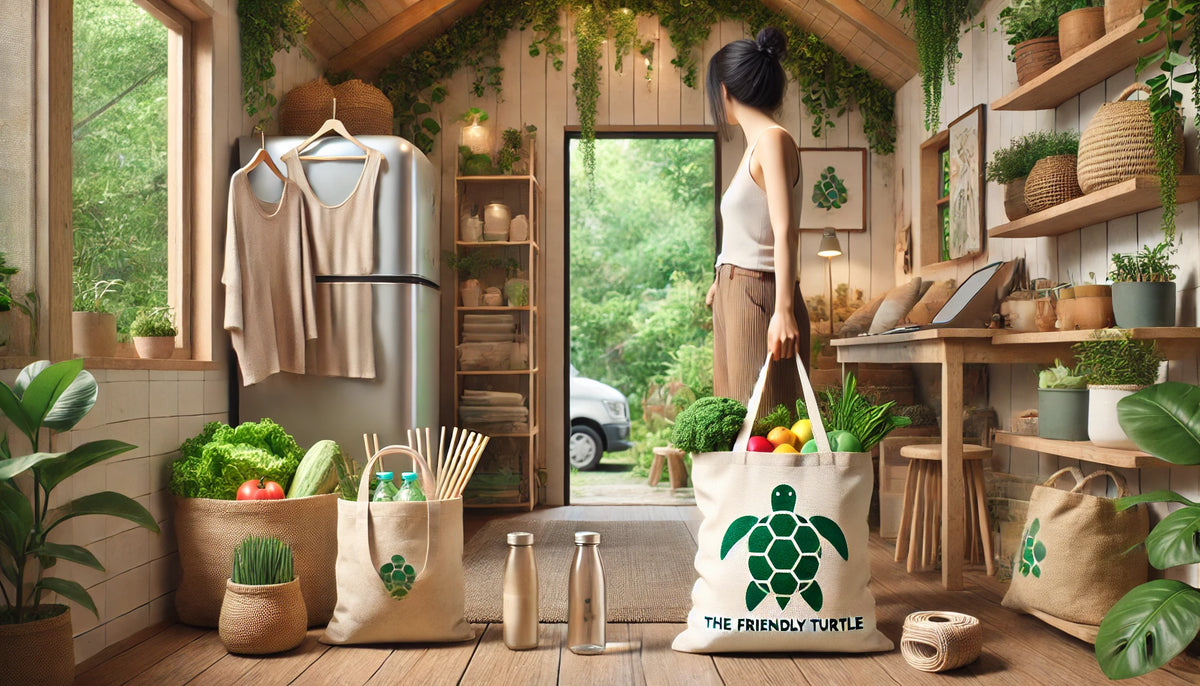
Take your own bags for grocery shopping. Carry a reusable water bottle, as well.
Grab a set of metal or bamboo straws, or keep a reusable coffee cup in your bag for your morning latte. All this can prevent thousands of single-use items from ending up in oceans or landfills.

Once seen as a fad, tiny homes have now become a megatrend. The Hogwarts Tiny House is urging people to live more simply and close to nature, explains autoevolution.
Tiny homes are small, compact units under 400 square feet. Affordability and simplicity aside, these spaces have gained traction because their minimal environmental impact is minimal.
This is not just a trend, however. It’s a lifestyle shift towards simplicity and sustainability because small space encourages people to live with less, which can be pretty freeing. You’ll have fewer things to clean, maintain, or worry about while shrinking your environmental footprint.
But it’s not just about space; tiny homes are often built with energy-efficient systems and eco-friendly materials. That is why they are a great option for anyone looking to live more sustainably.
As per Newsweek, Arkansas, Kentucky, and Maine are some states that lead the pack when it comes to tiny house living.
But even California, the most populous state, provides an excellent environment for tiny house living in the U.S. For Californians, transitioning to this sustainable lifestyle is not that difficult. The process of downsizing begins with selling your current home, so get down to it.
Selling homes in many cities in California is not a piece of cake, however.
In the San Francisco Bay Area, for example, many sellers are struggling to find buyers. This June, Solano County had the highest number of homes—57.7%—sitting on the market for over 30 days.
If you own a home in the Bay Area, skip taking the traditional route like hiring an agent. Save yourself from the hassle and sell your house to a cash buyer.
Choosing cash home buyers in San Francisco, John Buys Bay Area Houses says, can significantly ease the burden of selling your home. These professionals buy houses as they are—in any condition, even if they are dilapidated. Plus, they don’t charge any fees or commission—easy, isn’t it?
Not sure where to start? Click here to learn how the selling process works. That will help you take the first step toward downsizing into a simpler, greener life.
Don’t forget your wardrobe. Fast fashion is cheap, but its environmental impact is significant. It uses tons of water and harmful chemicals and results in vast amounts of waste since many items are worn only a few times before being tossed.
Instead of jumping on the fast fashion bandwagon, choose the sustainable route. Opt for clothes made from eco-friendly materials like bamboo, organic cotton, or recycled fabrics. These options use fewer resources and last longer.
Sustainable fashion can be just as chic, so you don’t have to sacrifice style. Girlfriend Collective, Outerknown, Paka, Everlane, and Nudie Jeans are some brands that put sustainability at their forefront.
The UN World Food Programme has found that one-fifth of food produced for human consumption is wasted or lost worldwide.
When food is discarded in the landfill, methane is released. This gas is 80 times more potent than carbon dioxide and is the second-largest contributor to climate warming after the latter.
Cut down on your food waste by planning meals ahead of time and using up leftovers. Apps like Too Good To Go also allow you to buy discounted food from grocery stores that would otherwise go to waste.
Living sustainably as a conscious consumer doesn’t mean turning your life upside down. It’s about making better choices and doing your part to reduce waste, conserve resources, and support businesses that are doing good.
Don’t dive headfirst, however. Start with one or two changes—like buying less and swapping disposable items with reusable ones—and go from there. These simple adjustments will benefit the planet as well as help you live more mindfully and with purpose.

Tasmania’s climate may feel familiar to anyone used to cool summers, damp winters and fast-changing coastal weather, but sustainable shed design requires far more than copying a standard British garden building. In this Friendly Turtle EcoBlog guide, we explore how stronger UV exposure, salt-laden air, local wind conditions, reactive soils and seasonal moisture shape the way a resilient shed should be planned. Site-specific engineering, suitable corrosion-resistant materials, effective drainage and a properly prepared foundation can all help prevent premature damage and costly replacement. Ventilation, insulation and natural daylight also improve year-round usability while reducing condensation, rust, mould and unnecessary energy use. Just as importantly, building only to the size genuinely needed can lower material use and make the structure easier to heat, ventilate, maintain and adapt over time. Choosing standard, repairable components instead of proprietary parts can further extend the shed’s lifespan and keep valuable materials out of landfill. By matching the design to the actual site rather than relying on a generic template, homeowners can create a practical, efficient and long-lasting structure that responds intelligently to Tasmania’s sun, salt, wind and rainfall.

