Seeing the look on a loved one’s face when they receive a gift is priceless, but the detrimental effects that gift packaging can have on the environment is staggering. Each year, 2.3 million pounds of wrapping paper ends up in landfill due to poor waste management. As more people become conscious of their environmental impact, the need for environmentally-friendly alternatives is growing. By choosing sustainable materials and creative wrapping methods, you can reduce waste while creating beautifully packaged gifts that reflect your green values.
Kelly from A.M. Custom Clothing says there has been “a huge surge in demand for eco-friendly product options”, with more and more consumers having this as an expectation.
Here’s your go-to guide for creating environmentally friendly gift packages, ensuring your gifts give as much to the planet as they do to the recipient.
Why Choose Eco-Friendly Gift Packaging?
Traditional gift packaging is often made from a mix of materials that are harmful to the environment. These materials include plastic-coated paper, glitter, and synthetic ribbons, all of which are difficult to recycle. Switching to sustainable gift packaging can help to reduce waste, conserve resources, plus it can even save you money in the long run.
The Core Principles of Sustainable Gift Packaging
If you’re looking to create an environmentally friendly gift, follow these core principles:
-
Reduce: Reduce the amount of packaging you use or remove it altogether where possible. Simplistic designs often have a more personal look and use fewer resources.
-
Reuse: Look to include materials and objects that can be repurposed, such as jars or fabric bags.
-
Recycle: Use recycled materials for your gift packaging that can be reused by the recipient.
What Sustainable Packaging Materials Are There?
When putting together a gift package, the materials you use can play a huge role - in more ways than one. Here are some eco-friendly packaging material options:
Eco-Friendly Paper Options
- Recycled kraft paper is an eco-friendly alternative to traditional wrapping paper. It’s sturdy, versatile and most importantly, it is recyclable.
- Seed-infused wrapping paper is a gift that keeps on giving. This packaging grows into plants when buried in soil.
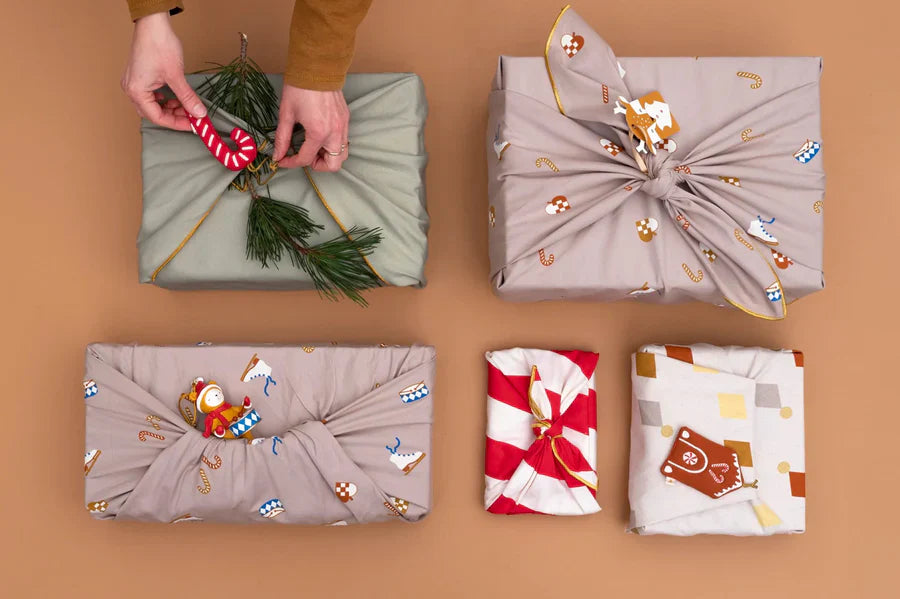
Fabric Wrapping with Furoshiki
If either of the above don’t tickle your fancy, Furoshiki is a traditional Japanese wrapping cloth used to wrap gifts in a stylish and reusable way.
Creative Eco-Friendly Wrapping Ideas
Opting for environmentally friendly gift wrapping needn’t take the colour out of giving. With the right accessories, you can transform your gift into something beautiful. Why not try:
-
Recycled Paper with DIY Decorations
Decorate recycled paper with DIY stamps or natural dyes for a more personal decorative touch.
-
Dried Flowers and Herbs
Traditional bows can be replaced with dried lavender, rosemary or eucalyptus for an elegant finish.
-
Repurposing Old Textiles
Wrap gifts in scarves, cloth napkins or pieces of fabric for a functional alternative to paper.
Thoughtful Presentation Tips
Elevate your eco-friendly gift packaging with these ideas:
-
Sustainable Gift Boxes
Opt for boxes made from recycled cardboard or biodegradable materials. Minimalist designs can be chic and reduce the need for excessive decoration.
-
Eco-Friendly Fillers
Swap plastic fillers for shredded recycled paper, dried flowers, or wood shavings to cushion your gift.
-
Personal Touches
Handwritten notes on recycled paper or DIY cards add a thoughtful element without additional waste.
Reusable Elements in Packaging
Making packaging part of the gift itself adds practicality and charm, whilst being mindful to the planet. Some ideas may include:
-
Reusable Bags and Totes
Package gifts in reusable tote bags. These are a sustainable alternative to disposable wrapping, and the recipient can use them or rehome them long after the gift is received.
-
Cloth Packaging
Use organic cotton pouches or branded fabrics to wrap your gifts. These can be repurposed as storage bags, tea towels, or decorative items.
Eco-Friendly Gift Ideas
You needn’t stop at sustainable gift packaging, why not make your gift sustainable, too? Here are some eco-friendly gift ideas:
-
Zero-Waste Kits
Reusable coffee cups are great for eco-conscious recipients.
-
Locally Bought Gifts
Buying from local, small businesses reduces the carbon footprint associated with shipping.
-
Sustainable Apparel
High quality, ethically made garments like organic cotton T-shirts or tote bags make thoughtful gifts.
Final Touches: Making Gift-Giving Greener
Sustainable gift packaging isn’t just about reducing waste; it’s about adding thoughtfulness to your gift-giving process. By choosing reusable, biodegradable or recycled packaging materials, you create a memorable gift and make a positive impact on the environment,
Friendly Turtle offers a wide range of eco-friendly products to help you make sustainable choices all year round. Explore our gifting collection to find items that reflect your commitment to living green.



0 comments