A toothbrush may seem to be something too small to make a difference in the global plastic crisis. However, over time, adding up the impact of every person on Earth, plastic toothbrushes create a lot of pollution.
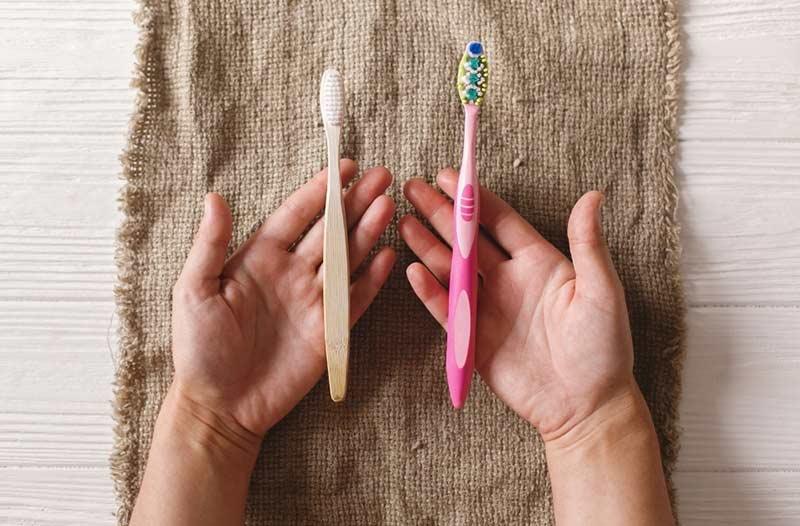
Thankfully, there is a simple and affordable solution – switching to the best manual toothbrush when considering the environmental impact: a bamboo one.
The perfect alternative to plastic
Let’s talk about the material used to make your typical plastic toothbrush. The handle is typically made from polypropylene, while the bristles are nylon – both of which are plastics created from fossil fuels.
This composition, as well as their small size, makes them very difficult to recycle. In practice, they almost never are except for a few toothbrush recycling programs available locally from a few brands. That means almost every plastic toothbrush is sent to a landfill after being thrown away.
There doesn’t really seem to be a consensus over how long it takes for a plastic toothbrush to decompose – different sources largely vary in their statements, ranging from 400 to 1000 years. However, they leave out one important factor: the fact that a plastic toothbrush does not decompose per se, the same way organic waste would.
Instead, it falls apart into smaller and smaller plastic particles. After a few hundred years, the plastic toothbrush may not be visible to the naked eye anymore, but the plastic it was made from still lingers in our environment in microscopic form.
The plastic toothbrush you’re using today will still be around on our planet many generations later.
The benefits of using bamboo
A bamboo toothbrush is one of the most eco friendly toothbrushes out there and is a perfect alternative to the plentiful plastic toothbrushes. It is arguably the best manual toothbrush out there, all factors considered.
Many of its benefits come from the properties of the bamboo plant – which is actually a grass, rather than a tree. It is one of the fastest-growing plants on the planet and does not need to be treated with pesticides or chemical fertilizers. Bamboo also doesn’t need much water to grow and produces around 35% more oxygen than a regular hardwood tree!
What makes bamboo an excellent material for toothbrushes are its antibacterial and anti-fungal properties, which makes it so that you don’t have to worry about your toothbrush not being sanitary.
How to choose the best bamboo toothbrush for you?
With how much popularity this best manual toothbrush has been gaining thanks to our increasing awareness of environmental issues and engagement with eco-friendly behaviours, there are many different options available on the market. How do you choose the best bamboo toothbrush?
Firstly, consider the type of bristles. There are three main types you’ll likely find – purely nylon bristles, bristles made from a combination of nylon and a plant-based material, or animal-based bristles. Of these three options, you’ll mainly want to avoid the third, since (even if we put the animal cruelty issues aside), they are very stiff and bacteria breed faster in them, which means you’d have to sanitize the brush very often and waste valuable energy.
When it comes to the bristles of a bamboo toothbrush, it’s also important not to fall victim to greenwashing. Some companies may be claiming that their bristles are 100% compostable or making other wild promises of sustainability without substantiating them. Remember to only buy from trusted companies who can walk the talk and show proof of their environmental performance.
Lastly, we recommend that you avoid buying your best bamboo toothbrush from a large corporation that causes large amounts of pollution and choose to support a small sustainable business instead. Remember – just because a company sells one sustainable product, it doesn’t mean that it’s sustainable to support it.
What about electric toothbrush heads?
We also get asked alot about recyclable electric toothbrush heads. If you prefer to use an electric brush, then you're in luck - there are also recyclable ones available to pick up. our favourites? Brushd stock a well-reviewed range for both Oral B and Philips Sonicare so you should be able to find one that suits!
Looking for other eco friendly dental care products? Try making the switch to a plastic free toothpaste UK made, or give a natural toothpaste a go. There are even toothpaste tablets available now which are super convenient for travel!
Or perhaps you're after a natural mouthwash or eco friendly dental floss? The main thing is, there are now completely plastic free ranges of dental care to help you remove 100% of the plastic from your dental hygiene routine. Compare that to how things were just a couple of years ago, and thats a pretty massive improvement, I think you can agree :)
Our Top Dental Care Brands



0 comments